

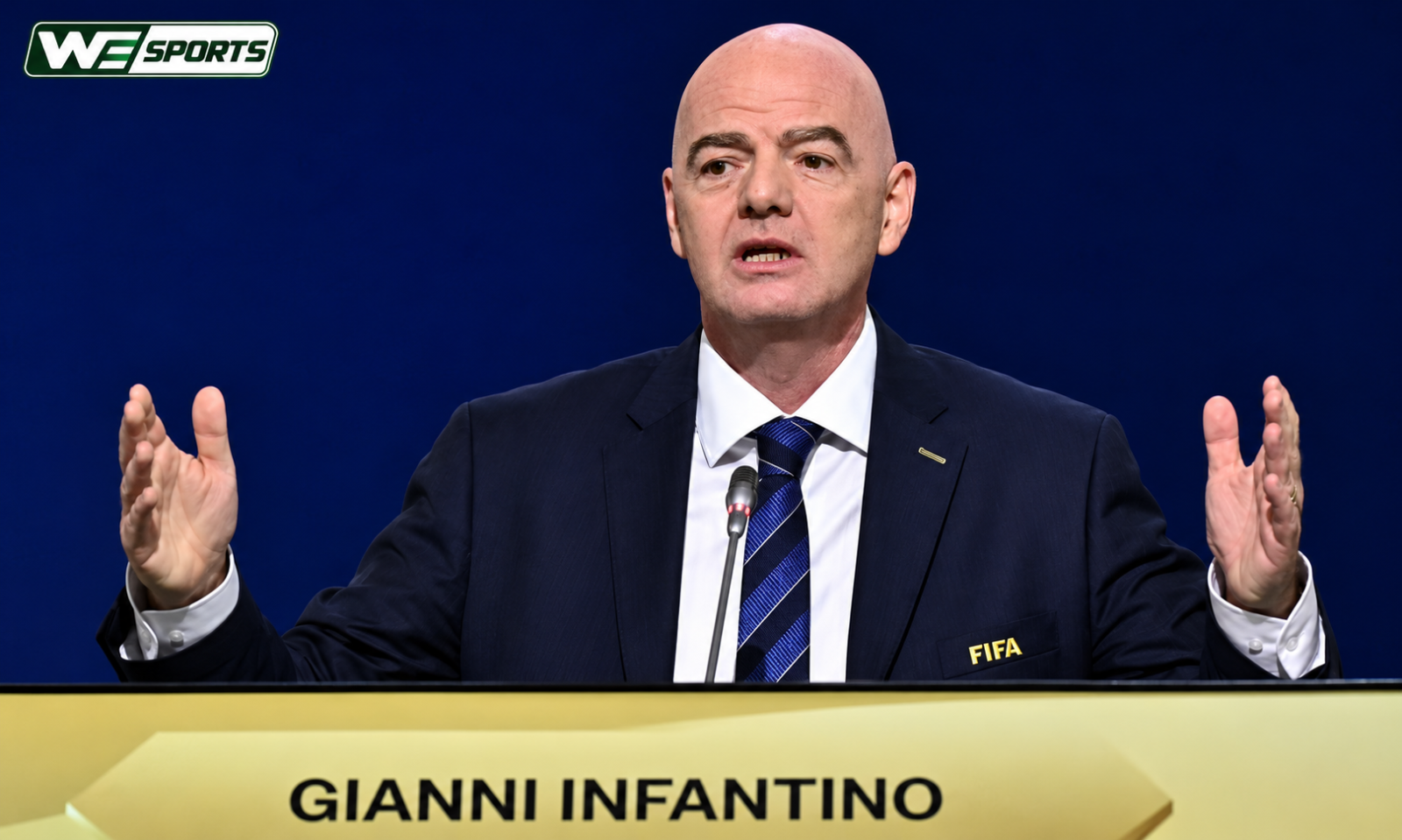
FIFA president Gianni Infantino could remain in office for a fourth and final term despite growing criticism over his leadership, with potential challengers yet to emerge as strong contenders ahead of next March’s election.
The 56-year-old Swiss official has reportedly lost support from several football associations following his proposal to introduce private investment into the World Cup’s commercial operations. However, he retains important backing from football associations in Africa and South America, strengthening his position in the re-election race.
Candidates must declare their intention to run by November 18, leaving the opposition with limited time to identify a credible challenger.
World Cup Investment Plan Triggers Opposition
Infantino’s FIFA Forward Enterprise (FFE) proposal emerged in July, shortly after the World Cup. The plan would have established a commercial subsidiary to manage major FIFA events, including the World Cup.
The proposal was subsequently shelved following criticism from several football associations and concerns surrounding its structure and transparency.
Two prominent critics, UEFA president Aleksander Ceferin and CONCACAF president Victor Montagliani, are reportedly preparing to seek re-election in their respective positions rather than challenge Infantino directly.
This has left opponents of the FIFA president searching for another candidate capable of mounting a serious campaign.
Terrence Burns, a marketing strategist involved in two successful World Cup hosting bids, believes Infantino remains in a strong position.
He told AFP that the FIFA president holds considerable advantages and suggested that potential challengers could struggle to build a credible campaign at this stage.
Former International Olympic Committee marketing chief Michael Payne also expressed surprise that no major candidate had emerged. He suggested that another Infantino victory would be an extraordinary political comeback.
Lise Klaveness Rules Out Presidential Bid
Lise Klaveness, president of the Norwegian Football Federation, has emerged as a prominent critic of Infantino but has ruled out running for the FIFA presidency.
Klaveness has attracted attention within football governance circles, although a presidential campaign would face significant obstacles.
A source familiar with football governance told AFP that Klaveness would face a different environment from Kirsty Coventry, who became the first woman elected president of the International Olympic Committee in 2025.
According to the source, Coventry benefited from support within the IOC administration, while Klaveness could face resistance from FIFA’s internal establishment.
Legal Challenges Could Complicate Infantino’s Re-election
Despite his apparent advantage, Infantino’s position is not without risks. Critics have pursued legal challenges in the United States and submitted formal complaints to FIFA committees.
Klaveness and the Norwegian federation have raised three concerns, including issues connected to Infantino’s relationship with US President Donald Trump.
The proposed FFE venture was expected to receive major investment from the venture capital firm of Josh Kushner, the brother of Trump’s son-in-law Jared Kushner.
The Norwegian federation’s complaints could lead to further scrutiny, although it remains uncertain whether FIFA’s committees will investigate them fully.
A source cited by AFP said the opposition could consider taking the matter to the Court of Arbitration for Sport (CAS) if it was dissatisfied with FIFA’s handling of the complaints.
UEFA has also launched legal proceedings in US courts seeking access to documents relating to the FFE proposal. FIFA is strongly contesting that case.
Burns described the dispute over access to the documents as a potential problem for Infantino, arguing that questions about transparency could continue to affect his leadership.
Support from Major Football Nations Under Pressure
Payne also pointed to the apparent lack of support for Infantino from major football nations such as Spain, France and England.
He argued that unity is essential for a global sports governing body and warned that divisions within FIFA could deepen if the dispute continues.
Burns, however, believes football associations may ultimately prefer to reach an accommodation with Infantino rather than risk prolonged conflict within the organisation.
He suggested that opposition would be more likely to unite around removing the FIFA president if serious wrongdoing were established or if member associations saw clear financial advantages in changing leadership.
For now, the absence of a prominent challenger appears to favour Infantino. Nevertheless, the legal proceedings, complaints and questions over the FFE proposal could shape the campaign as the election approaches.
The outcome will depend on whether the opposition can agree on a viable candidate and whether the controversies surrounding FIFA’s leadership significantly affect support among its member associations.















Leave a comment